Gukje Milmyeon: The Origin and History of the Name
Gukje Milmyeon is located in Geoje-dong, Yeonje-gu, Busan, specifically near the main gate of the Busan National University of Education. The name 'Gukje' (International) is known to have originated from the nearby Kookje Shinmun (International Newspaper) building. The main branch is situated in the alley behind this newspaper building.
This isn't just an old noodle shop. It is a renowned restaurant selected by the Blue Ribbon Survey (Korea's answer to the Michelin Guide) for over 10 consecutive years, and a true local gem that has gone viral among Busan natives for a long time. The fact that many people frequented Gukje Milmyeon long before the Blue Ribbon recognition proves just how authentic and consistent its taste has been over the years.
Location and Accessibility
- Address: 23-6, Jungang-daero 1235beon-gil, Yeonje-gu, Busan
- Phone: 051-501-5507
- Closed: Traditional Holidays (Seollal, Chuseok)
The main branch of Gukje Milmyeon is located within walking distance from Busan National University of Education Station (Busan Subway Line 1), making it very convenient to access via public transport. Since it is located on a side street, first-time visitors might find it slightly tricky to spot, but if you walk a little way in from the university's main gate, you will find it easily.
Parking facilities are also available. There is a dedicated parking lot across from the building, making it convenient for those driving. However, the parking lot is not very large, so finding a spot during peak lunch or dinner hours can be difficult. Therefore, using public transportation is recommended.
Menu and Prices
The menu at Gukje Milmyeon is incredibly simple, reflecting a philosophy of focusing solely on Milmyeon (wheat noodles).
Main Menu:
- Mul-milmyeon (Cold Soup Noodles) - Small: 9,000 KRW
- Mul-milmyeon (Cold Soup Noodles) - Large: 10,000 KRW
- Bibim-milmyeon (Spicy Mixed Noodles) - Small: 9,000 KRW
- Bibim-milmyeon (Spicy Mixed Noodles) - Large: 10,000 KRW
Additional Menu:
- Sari (Extra Noodles): 3,000 KRW
- Garnish Set (Extra Meat/Egg): Separate Price
Secrets of Gukje Milmyeon's Special Taste
1. The Deep Flavor of the Broth Gukje Milmyeon creates its noodles using a unique method, specifically utilizing a broth made entirely from cattle leg bones. Unlike most Milmyeon restaurants that use a pork-based broth, Gukje Milmyeon distinguishes itself by using beef bone broth.
When you sit at a table, the first thing served is a kettle of warm broth (On-yuksu). Although the color looks pale and mild, the savory umami flavor is incredible, making you sip it again and again. This warm broth isn't just a side drink; it’s an essential part of the meal. Drinking it before and after eating the noodles cleanses the palate and aids digestion.
Characterized by a clean and refreshing taste, the broth receives high praise for being delicious and savory even without the taste of herbal medicine. While many Busan Milmyeon places add medicinal herbs for a unique aroma, Gukje Milmyeon minimizes herbal scents to highlight the deep, natural flavor of the bone broth. This can be a point of preference; those expecting the distinct herbal aroma of traditional Milmyeon might find it slightly plain, but for those who prefer a clean and light taste, this is the best choice.
2. Springy and Chewy Noodles The life of Milmyeon lies in the noodles. When you order here, the noodles often arrive in a neat, folded bundle, which is a technique to preserve their texture. Immediately after being pulled, the noodles are washed in ice-cold water. This process strengthens the elasticity of the noodles, allowing you to enjoy a chewier texture.
The noodles at Gukje Milmyeon boast the perfect balance of elasticity and chewiness. They are not too tough, yet not easily broken, offering an exquisite texture. Cutting them just once with scissors makes them easier to eat while still allowing you to fully enjoy the texture.
3. Special Garnish (Gomyeong) While most places use machine-sliced meat for garnish, this restaurant features hand-torn beef brisket, which is torn thinly by hand. This is a unique characteristic of Gukje Milmyeon; the meat is much more tender than machine-cut slices and blends perfectly with the broth.
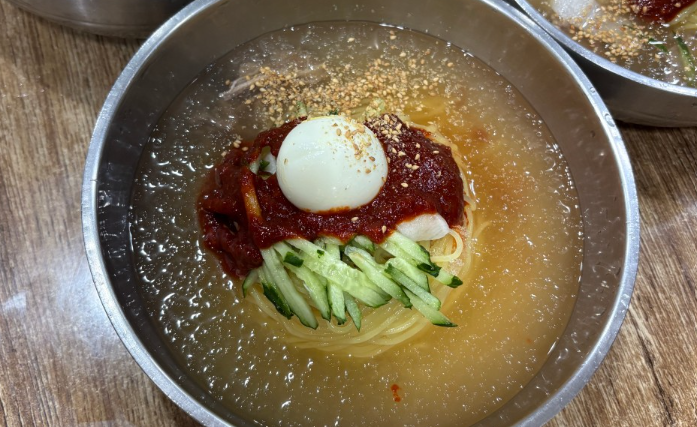
Other garnishes include half a boiled egg, julienned cucumber, and pickled radish. The pickled radish adds a crunchy texture and deepens the flavor when eaten with the noodles. It is recommended to eat the egg before the noodles, as it helps protect your stomach.
Another feature is that you can order an extra garnish set. If you are a meat lover, ordering the garnish set allows you to enjoy a generous amount of the savory brisket.
Mul-milmyeon vs. Bibim-milmyeon: Which to Choose?
Mul-milmyeon (Cold Soup Noodles) Mul-milmyeon is arguably Gukje Milmyeon's signature dish. The noodles served in cold broth with floating ice slush will blow away the summer heat instantly. If you visit in winter, the noodles might feel so cold that your teeth ache—this is the essence of Yi-naeng-chi-naeng (fighting cold with cold).
The broth is transparent and clear. It may look bland at first glance, but one sip reveals a hidden depth of savory flavor. It is a mild, non-stimulating taste that becomes addictive the more you eat.
You can add vinegar and mustard from the self-service bar according to your taste. Personally, I recommend tasting the broth as is for the first spoonful, then adjusting it to your liking. The broth is delicious on its own, but a little vinegar adds a refreshing kick.
Bibim-milmyeon (Spicy Mixed Noodles) Bibim-milmyeon, with its perfect harmony of sweet-and-sour sauce and chewy noodles, is just as popular as the soup version. Gukje Milmyeon’s Bibim version is characterized by a distinct garlic scent. It is heaven for garlic lovers, but if you dislike the smell of garlic, you might want to stick to the Mul-milmyeon.
The sauce is excellent—not too spicy, but perfectly sweet and tangy. Mixing it well and eating it with the pickled radish doubles the flavor. Many reviewers say that wrapping the sauced noodles in the radish slices is fantastic.
However, since the Bibim-milmyeon has a bit of a spicy kick, those who cannot handle spicy food well should scoop out some sauce beforehand or choose the Mul-milmyeon. For first-time visitors, ordering one of each to share and experience both flavors is a great strategy.
Atmosphere and Service
Interior The restaurant is quite large. It offers both floor seating (traditional style) and regular table seating, giving you plenty of options. The overall atmosphere is neat, and cleanliness is maintained at a high level. There is also a restroom located inside the restaurant for convenience.
Although there are enough tables to accommodate groups, it is always full during peak lunch or dinner times. The table turnover is fast, so waiting times aren't usually too long, but if you want a relaxed meal, avoiding peak hours is recommended.
Self-Service System Gukje Milmyeon has a well-equipped self-service bar. Warm broth, cold broth, and radish kimchi are available for you to take freely. The warm broth is provided in a kettle at the table initially, but you can get more from the self-bar if needed.
Condiments like vinegar and mustard sauce are also prepared at the self-bar. Basic items like water and napkins are also self-service.
Service and Kindness The restaurant is rated as friendly and clean. Even during busy times, the staff tries to be as kind as possible, and orders are processed quickly. Due to the nature of a specialty noodle shop, orders are simple, which contributes to the fast service.
Information for Foreign Tourists
Gukje Milmyeon is also popular among foreign tourists. This is because Milmyeon is not only a local food representing Busan, but also a dish that suits foreign palates well.
- Menu: The menu on the wall is in Korean only, but since the menu is so simple (Mul-milmyeon or Bibim-milmyeon), you won't have trouble ordering. You can simply point to photos or say the names.
- Language: Staff members who speak fluent English may not always be present, but they try hard to be helpful. Using a translation app can help facilitate smoother communication.