The Taste of the Provisional Capital, Accompanied by the Joys and Sorrows of Refugees
Milmyeon (wheat noodles) is a local dish representing Busan. Created by displaced people from Hamgyeong-do who fled to Busan during the Korean War, this dish began as a substitute for the Naengmyeon (cold buckwheat noodles) they missed from home. They made noodles using wheat flour provided as aid by the U.S. military instead of buckwheat. Milmyeon, which embodies the pain of war and the joys and sorrows of refugees, has now gone beyond Busan to become a beloved summer delicacy nationwide.
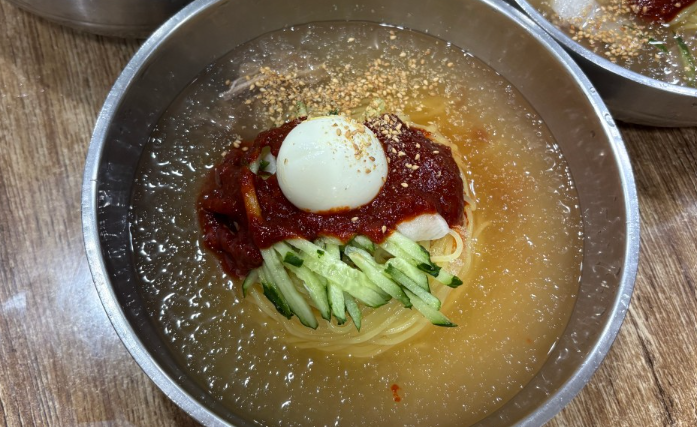
1. The History and Background of Milmyeon
1.1 The Korean War and the Influx of Refugees
The birth of Milmyeon is closely related to the Korean War. When the war broke out in 1950, Busan became the provisional capital of South Korea. Following the January 4th Retreat in 1951, many displaced people settled in Busan. According to the Encyclopedia of Korean Culture, Milmyeon originated when refugees from North Korea mixed potato starch into the wheat flour brought in as aid supplies to make cold noodles, as buckwheat was unavailable.
While traditional Korean Naengmyeon uses buckwheat as its main ingredient, buckwheat became difficult to find after the Korean War. Conversely, wheat flour became common due to U.S. military relief supplies. Mixing this flour with sweet potato starch to make noodles can be seen as the beginning of Busan Milmyeon. (Source: Encyclopedia of Korean Culture)
The prevailing theory is that refugees from Hamgyeong-do, craving Naengmyeon during the war but lacking potato starch, used the wheat flour distributed by the U.S. military. The roots of Milmyeon lie in the Hamheung region—more precisely, it stems from Hamheung Naengmyeon, which refers to "Nongma-guksu" (starch noodles) or "Hoe-guksu" (raw fish noodles). (Source: Namuwiki)
1.2 The Birth of Naeho Naengmyeon (1919-1952)
The history of Naeho Naengmyeon, known as the originator of Milmyeon, dates back to 1919. It started at "Dongchun Myeonok," an authentic North Korean-style cold noodle specialty shop opened by the late Lee Young-soon, who came to Busan from Heungnam, South Hamgyeong Province. The late Lee Young-soon is the maternal grandmother-in-law of the current representative, Lee Chun-bok. (Source: Busan Metropolitan City)
Jeong Han-geum, who ran the noodle shop Dongchun Myeonok in Naeho, Heungnam, fled to the provisional capital of Busan aboard a U.S. Navy LST (Landing Ship, Tank) with her mother during the January 4th Retreat. The shop name "Naeho" was taken from her hometown in Heungnam, reflecting her longing for home. (Source: Busan Metropolitan City, Namuwiki)
Naeho Naengmyeon was passed down from the founder, the late Lee Young-soon, to her daughter, Jeong Han-geum. Inheriting her mother's culinary skills, Jeong’s noodle shop prospered, and in 1952, she moved the shop to Uam-dong, Nam-gu, changing the name to "Naeho Naengmyeon." The history of Milmyeon began in earnest from this point.
When buckwheat became scarce after the Korean War, Jeong Han-geum made and sold "Milmyeon" using wheat flour and sweet potato starch instead. After the war ended, wheat flour was supplied in large quantities as U.S. aid, leading to the creation of various noodles by region; this social atmosphere also acted as a backdrop for the birth of Milmyeon. (Source: Busan Metropolitan City)
1.3 Various Theories of Origin
There are several theories regarding the origin of Milmyeon. According to Wikipedia, the first theory is that refugees made it to alleviate hunger during the Korean War. The second theory is that a mother and daughter from Hamheung, South Hamgyeong Province (North Korea), opened a cold noodle shop in Busan, giving birth to Milmyeon.
The third theory is that it originated from Jinju's Mil-guksu Naengmyeon. Historically, Jinju had a wheat noodle dish made with anchovy broth. When the Gyeongnam Provincial Office moved from Jinju to Busan in 1925, Jinju's wheat noodles came to Busan and settled as Busan Milmyeon. (Source: Wikipedia)
2. The Development Process of Milmyeon
2.1 1950s-1960s: The Beginning in Refugee Camps
At the time, Uam-dong in Nam-gu was a massive refugee camp. Naeho Naengmyeon started business in a shantytown, gradually expanding to the houses in front and next door, establishing itself as the Naeho Naengmyeon of today. As the shop's history deepened, it was passed down through generations. (Source: Busan Metropolitan City)
Initially, it was called Mil-naengmyeon (Wheat Naengmyeon), Busan Naengmyeon, or Gyeongsang-do Naengmyeon, but the term settled as "Milmyeon," an abbreviation of Mil-naengmyeon. When the Korean War broke out, refugees from all eight provinces of Korea flooded into Busan. At that time, you could hear dialects from all over the country in Busan and taste distinctive regional foods from everywhere. (Source: Encyclopedia of Korean Culture, Visit Busan)
2.2 1970s: The Beginning of Popularization
Milmyeon began to be popularized in Busan after the 1970s, as Milmyeon shops sprang up everywhere. According to Visit Busan, the number of Milmyeon restaurants began to increase significantly during this period, and it started to establish itself as a daily meal for Busan citizens.
2.3 Late 1990s Onward: Rising as Busan's Representative Food
From the late 1990s, Milmyeon began to be spotlighted as a representative food of Busan. In 2006, it was designated as a Busan Local Food. This was largely due to the "Nopo" (long-standing heritage shops) that had been making Milmyeon for generations. From shops that have continued for three generations since the Korean War to those famous for their own secret recipes, various Milmyeon restaurants named after the owners' hometowns or neighborhoods are still thriving throughout Busan. (Source: Visit Busan)
In 2009, Busan Metropolitan City selected Milmyeon as a representative regional local food. Most of the local foods that currently represent Busan were created during the Korean War, and Milmyeon is one of them. (Source: FAM Times)
3. Characteristics of Milmyeon
3.1 Ingredients and Noodles
The difference from Naengmyeon is that the noodles are made by mixing wheat flour with potato or sweet potato starch instead of buckwheat flour. Noodles made from a blend of wheat flour and starch powder (sweet potato or potato starch) are served in a chilled broth made from pork or beef leg bones brewed with various medicinal herbs and vegetables.
Generally, shaping noodles made only from wheat flour is not difficult, but they lack the chewy texture of those made with starch. To compensate for this, the noodles are extruded using high pressure, boiled in boiling water, and then rubbed and washed in cold water several times. This process removes surface starch and stops gelatinization, resulting in Milmyeon with a chewy texture. (Source: Encyclopedia of Korean Culture)
To create chewy noodles, starch is sometimes added to medium-protein wheat flour (jungnyeokbun) for the dough. In particular, Busan Milmyeon uses raw noodles made by kneading wheat flour with salt and aging it for a day.
While Pyeongyang Naengmyeon and Hamheung Naengmyeon often appear light gray due to sweet potato/potato starch or light brown due to buckwheat, Milmyeon is pure white because it is made of wheat flour. Therefore, it is clean and white without the buckwheat specks often seen on the surface of Naengmyeon noodles. The dough is also white, looking similar to bread dough.
3.2 Broth and Taste
Milmyeon has a sweeter broth compared to regular Naengmyeon. Since pork is used, the broth often has the scent of medicinal herbs added to suppress the porky smell. This aroma comes from the large amounts of angelica root (danggwi) and licorice used in the broth recipe of the Gaya Milmyeon style.
To suit the Gyeongsang-do palate, which prefers strong flavors due to the warm climate, Milmyeon contains a lot of seasoned red pepper paste (dadaegi), characterized by a spicy, sweet, and stimulating taste. Also, unlike Naengmyeon, it typically includes more slices of boiled pork (suyuk).
4. Milmyeon Recipe
4.1 Preparation of Ingredients
According to the Lampcook recipe, the basic ingredients are as follows:
- Milmyeon (raw noodles) 600g
- Pork (loin) 200g
- Cucumber 120g (1 ea), Radish 120g, Pear 120g (1/3 ea)
- Eggs 100g (2 ea)
- Broth 1.2L (6 cups): Pork bones, brisket, water, green onion, garlic
- Seasoning: Red chili powder, soy sauce, sugar, minced green onion, ginger juice, sesame salt, sesame oil, mustard, vinegar
4.2 Boiling Noodles
When you order Milmyeon, the noodles often arrive at the table in a neat, undisturbed bundle. This stems from a secret method to preserve the chewy taste. Immediately after pulling the noodles, they are washed in ice-cold water; this increases the elasticity of the noodles, allowing for a chewier texture. (Source: Visit Busan)
Put 1 serving of Milmyeon into 1000cc of boiling water and boil for 1 minute. Remove before foam rises and scrub vigorously with both hands in cold water to remove the starch. You must wash and shake them off until the water runs clear to create elasticity in the noodles. (Source: 10,000 Recipes)
Boil the Milmyeon in boiling water, rinse several times in cold water, make a bundle, and place it in a bowl. (Source: Lampcook)
4.3 Preparing Garnish (Gomyeong)
Various garnishes are added to bring out the flavor of Milmyeon, and these show the individuality of the shop. Like Naengmyeon, a boiled egg is commonly placed on top. This is because the egg acts to protect the stomach. Therefore, it is common to eat the egg before eating the noodles. The shredded radish served on top adds a crunchy texture when eaten with the noodles and enhances the flavor depth. (Source: Visit Busan)
Scrub the cucumber with salt to clean it, cut it in half, slice diagonally to 0.3cm thickness, salt it, drain the water, and lightly stir-fry over high heat in a pan with cooking oil. Julienne the radish and mix with seasoning. Boil the pork and prepare it as slices (pyeonyuk). (Source: Lampcook)
Boil the eggs and cut them in half, or fry egg garnish (jidan). Let it cool slightly, cut into quarters, and slice as thinly as possible to match the texture of the Milmyeon. (Source: 10,000 Recipes)
4.4 Completion
Place the sauce on top of the noodles, followed by the pickled radish, cucumber strips, egg, and meat slices. Finally, pour in the broth and add vinegar and liquid mustard to complete a refreshing bowl of Milmyeon. For one bowl, adding 1 teaspoon of mustard and 1 tablespoon of vinegar makes the Milmyeon tastier. (Source: 10,000 Recipes)
Pour the pre-frozen broth, add the noodles, top with the dadaegi seasoning paste, and arrange the garnishes beautifully to finish. It is even more refreshing if the broth is frozen into a slushy state beforehand. (Source: 10,000 Recipes)
5. Difference Between Milmyeon and Naengmyeon
Milmyeon is a dish derived from Naengmyeon. Unlike Naengmyeon, which mixes buckwheat flour with starch, Milmyeon is made with wheat flour, making the noodles softer and easier to eat, which is why it is enjoyed by people of all ages. (Source: FAM Times)
Although the noodles are made from wheat flour, the thickness is somewhere between Jjolmyeon (chewy noodles) and Somyeon (thin noodles). Also, even though it is wheat flour, because it is mixed with potato or sweet potato starch, the texture is different from Somyeon, which is 100% wheat flour. (Source: Namuwiki)
| Category | Milmyeon | Naengmyeon |
| Main Ingredient | Wheat flour + Starch | Buckwheat + Starch |
| Noodle Color | Pure white | Light gray / Light brown |
| Texture | Soft and chewy | Tough and chewy |
| Taste | Sweet and stimulating | Mild and clean |
| Broth | Pork + Medicinal herbs | Beef / Dongchimi (Radish water kimchi) |
| Price | 7,000 ~ 10,000 KRW | 10,000 ~ 15,000 KRW |
The price is around 7,000 to 10,000 won, which is cheaper than Naengmyeon since it does not use buckwheat. (Source: Namuwiki)
6. Cultural Significance and Modern Value
6.1 Memories of War and the Sorrows of Refugees
Milmyeon is a food born out of the national tragedy of the Korean War. This food, created by refugees who had to leave their hometowns and live in a strange land while missing the Naengmyeon of home, contains the pain of war and the will to survive. Their effort not to forget the taste of their hometown, even while eating noodles made from U.S. aid flour instead of buckwheat, gave birth to Busan's representative local food of today.
6.2 Busan’s Identity
Milmyeon has now become a food that represents the identity of Busan. Designated as a Busan Local Food in 2006 and selected as a representative regional local food by Busan Metropolitan City in 2009, Milmyeon has established itself alongside Dwaeji-gukbap (Pork Soup and Rice) as a symbol of Busan.
In the Bu-Ul-Gyeong region (Busan, Ulsan, Gyeongnam), it has almost replaced the status of Naengmyeon found in other regions, and Milmyeon specialty shops can be seen everywhere in these areas. Milmyeon is loved so universally that it is perhaps the food with the lowest probability of failure when dining in Busan.
6.3 Tradition and Modernization of "Nopo" (Heritage Shops)
Thanks to the "Nopo"—long-standing shops that have been making Milmyeon for generations—Milmyeon was able to gain popularity as Busan's representative food. From shops that have continued for three generations since the Korean War to those that went viral for their unique secrets, various Milmyeon restaurants named after the owner's hometown or neighborhood are still thriving throughout Busan.
At the same time, Milmyeon is modernizing. With the release of instant Milmyeon and the emergence of nationwide Milmyeon chains, it has become easier to enjoy Milmyeon outside of Busan. However, to feel the true taste of Milmyeon, you still have to visit the heritage shops of Busan.
7. Conclusion
Milmyeon is an icon of modern Korean cuisine that was born amidst the national tragedy of the Korean War and established itself as Busan's representative local food in just over 70 years. This food, which began by making noodles with U.S. aid wheat flour instead of buckwheat, contains the refugees' longing for their hometowns and their will to survive.
The history of Milmyeon began in earnest when Dongchun Myeonok, which started in Hamheung in 1919, settled as Naeho Naengmyeon in Uam-dong, Busan, in 1952. It became popularized as Milmyeon shops multiplied after the 1970s, and was officially recognized as Busan's representative food when it was designated as a Busan Local Food in 2006.
With pure white noodles made of wheat flour and starch, a sweet and stimulating taste combining pork broth with the scent of medicinal herbs, and a popular appeal that allows everyone to enjoy it at a price cheaper than Naengmyeon, Milmyeon has become a food loved in Busan as much as Dwaeji-gukbap.
As various variations such as Water Milmyeon, Bibim (Spicy Mixed) Milmyeon, and Mugwort Milmyeon have emerged, and distinct Milmyeon shops like Gaegeum Milmyeon, Gaya Milmyeon, and Choryang Milmyeon have been born in each region, Milmyeon has gone beyond simple food to become a symbol representing Busan's culture and identity.
A bowl of cool Milmyeon with floating ice on a summer day contains the pain of war, the joys and sorrows of refugees, the longing for home, and the strength and optimism of the Busan people who overcame it all. Milmyeon is not just delicious food, but a cultural heritage where you can experience the history and spirit of Busan through taste.
How about trying a bowl of Milmyeon in Busan this summer? You will be able to taste the 70 years of history and culture contained within it.